
What does the federal Budget 2026 mean for Halifax home sellers?
More than most sellers are currently factoring into their pricing and timing decisions. The measures that have reshaped buyer eligibility, financing limits, and new-build economics over the past 18 months have changed who is shopping your property, what they can afford, and how your resale listing competes with new construction across Halifax Regional Municipality.
JOHNNY DULONG | FAMILY REAL ESTATE ADVISOR | EXIT REALTY METRO | HALIFAX, NOVA SCOTIA
I'm Johnny Dulong, Family Real Estate Advisor with EXIT Realty Metro in Halifax, Nova Scotia, licensed REALTOR® (NS #NA5059). I've been helping Halifax sellers position, price, and close for 24 years — across every type of market HRM has produced. You can explore seller resources and request a home evaluation at SellHalifaxRealEstate.com. [LINK: SellHalifaxRealEstate.com → https://www.sellhalifaxrealestate.com | opens in new tab]
Most of the coverage of the Carney government's housing agenda has been written from the buyer's perspective — and fairly so, since the first-time buyer programs are the headline. But every policy that affects buyers changes the seller's equation too. If you are planning to list in Halifax Regional Municipality in 2026, this is the read you have not seen yet.
THE CURRENT MARKET CONTEXT SELLERS NEED TO UNDERSTAND
Before getting to the policy implications, it is worth grounding this in what the Halifax seller market actually looks like right now, because the backdrop shapes how much every one of these changes matters.
The Halifax-Dartmouth market delivered a decisive spring turn in March 2026. The median days on market dropped to 13 days — a striking contrast to the 44-day winter plateau recorded in January 2026 and approaching the spring 2025 lows of 8 to 11 days. Sellers who priced correctly in March received an average of 98.6% of their original asking price, recovering sharply from a November 2025 low of 96.2%. The sale-to-last-list price ratio came in at 99.2%, meaning homes that were already appropriately priced needed almost no adjustment to close.
573 new listings came to market in March 2026, tracking closely with March 2025's 585. Sellers are re-entering at a seasonal pace consistent with prior years. With 2.4 months of supply recorded in March — well inside the six-month threshold that defines a balanced market — conditions remain tilted toward sellers on accurately priced properties.
The important qualifier is in that phrase: accurately priced. Overpriced listings are sitting. The listings that are transacting in 13 days are not lucky — they are prepared and priced to the data.
For the full March 2026 HRM market analysis, see the market normalisation post on this blog. [LINK: Is the Halifax Real Estate Market Finally Normalizing in 2026? → https://sellhalifaxrealestate.com/blog.html/halifax-real-estate-market-update-april-2026-8984484 | opens in new tab]
HOW BUDGET 2026 HAS CHANGED YOUR BUYER POOL
This is the section that most sellers are not thinking about — and should be.
The December 2024 mortgage rule changes, which are now fully embedded in the spring 2026 market, expanded who can purchase in Halifax in two meaningful ways. The insured mortgage cap was raised from $1 million to $1.5 million, meaning buyers with less than 20% down can now access CMHC-backed insured mortgage rates on purchases up to $1.5 million. In Halifax, where a well-located detached home in Bedford, Clayton Park, or Cole Harbour often sits between $650,000 and $1.1 million, this directly expands the pool of qualified buyers for your property.
The 30-year amortisation for insured mortgages — now available to all first-time buyers and all buyers purchasing new builds — has lowered monthly payments and improved stress test qualification thresholds at current purchase prices. In practical terms, a buyer who could not qualify for a $650,000 purchase under 25-year amortisation rules may now qualify under 30-year rules at the same rate. That buyer exists in your market, and they were not there 18 months ago.
What this means for you as a Halifax seller: your listing is being evaluated by a wider, better-qualified pool of buyers than existed at the 2022 or 2023 market peak. The demand-side fundamentals are stronger than the headline sales volume suggests. First-time buyers in HRM are active in the $500,000 to $650,000 range. Move-up buyers — those trading from a smaller home into a larger one — are most active in the $750,000 range, according to RE/MAX's 2026 Halifax Housing Market Outlook. Downsizers and retirees are targeting single-level homes and condominiums in the $700,000 to $800,000 range.
THE NEW-BUILD PRICING PROBLEM YOUR LISTING NOW FACES
Here is the policy implication that most Halifax sellers have not yet internalised, and it is the most strategically important one.
Bill C-4 — the Making Life More Affordable for Canadians Act — received Royal Assent on March 12, 2026. It eliminates the federal GST on newly built homes purchased by eligible first-time buyers on homes priced up to $1 million, with a maximum federal saving of $50,000. Nova Scotia's HST is 14% — 5% federal and 9% provincial. The Bill C-4 rebate applies to the 5% federal portion. At a $600,000 new-build purchase, that is $30,000 back to the buyer.
Resale homes do not attract GST, so this rebate does not apply to your property. But here is the problem: your property is now competing with new builds that are effectively $30,000 cheaper for the first-time buyer who qualifies. A buyer comparing your resale at $625,000 and a new build at $650,000 is not comparing equivalent net costs anymore. The new build, after the GST rebate, costs less in real terms.
This is not an argument to slash your asking price. It is an argument to understand your buyer. If your property is a detached resale in a price range where it competes directly with new construction in HRM — Bedford West, Dartmouth's Southdale node, Sackville's Indigo Shores — this differential needs to be part of your pricing conversation. If your property is a unique resale on the peninsula, in a heritage neighbourhood, or in an established community with no meaningful new-build competition at your price point, the GST rebate issue is largely irrelevant.
The right response is knowing which category your property is in. That calculation depends on a granular understanding of what is actually being built near you, at what price, and who is buying it.
For the full breakdown of how Bill C-4 and the December 2024 mortgage rule changes are reshaping the Halifax buyer landscape, see the federal housing changes post on this blog. [LINK: How Federal Housing Changes Are Reshaping What Is Possible for Halifax Buyers and Sellers in 2026 → https://sellhalifaxrealestate.com/blog.html/federal-housing-changes-and-what-they-mean-for-halifax-buyers-in-2026-8979839 | opens in new tab]
CONDITIONS ARE BACK — AND THAT AFFECTS YOUR TIMELINE
One of the less-discussed seller implications of the current policy environment is the return of financing conditions in accepted offers. At the market peak in 2021 and 2022, buyers routinely waived conditions to compete. That era has passed across most of Halifax Regional Municipality.
The expanded buyer pool that the new mortgage rules have created is not an unconditional-offer pool. These are qualified buyers using insured mortgages, often with financing conditions and home inspection clauses included. That is a healthy change for the market overall. For sellers, it means your accepted offer process needs to account for realistic financing timelines — typically five to seven business days for a financing condition — rather than the frictionless, same-week closings that some sellers still expect.
Presentation and preparation matter more, not less, when buyers have time to conduct due diligence. A home that shows well, has a clean title, and has addressed obvious deferred maintenance will convert conditions to firm offers smoothly. One that surfaces surprises during an inspection will face renegotiation or collapsed deals. Sellers who prepare before listing avoid those conversations.
For a full guide to what Halifax sellers need to do before listing in the current market, see the selling section of this website. [LINK: Selling a House in Halifax → https://sellhalifaxrealestate.com/selling.html | opens in new tab]
WHAT BUILD CANADA HOMES MEANS FOR RESALE SELLERS — AND WHAT IT DOESN'T
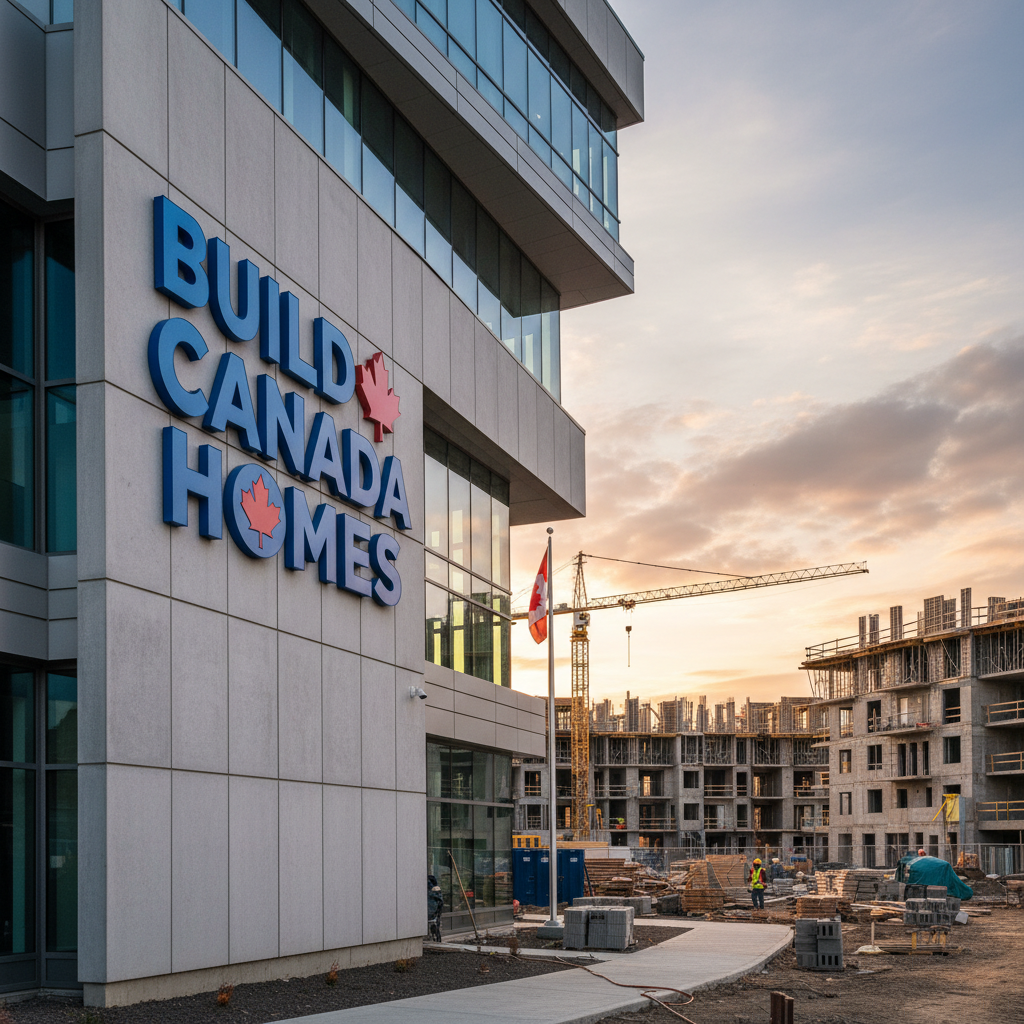
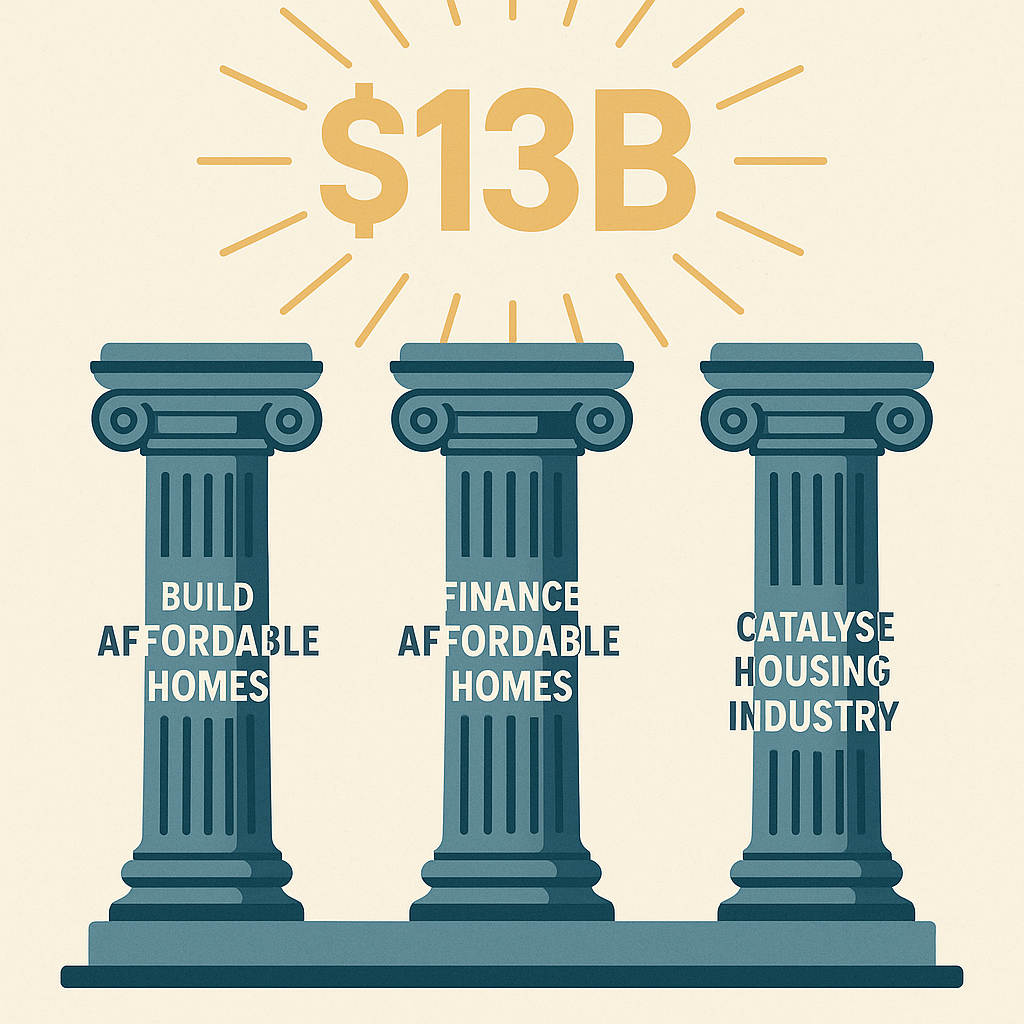
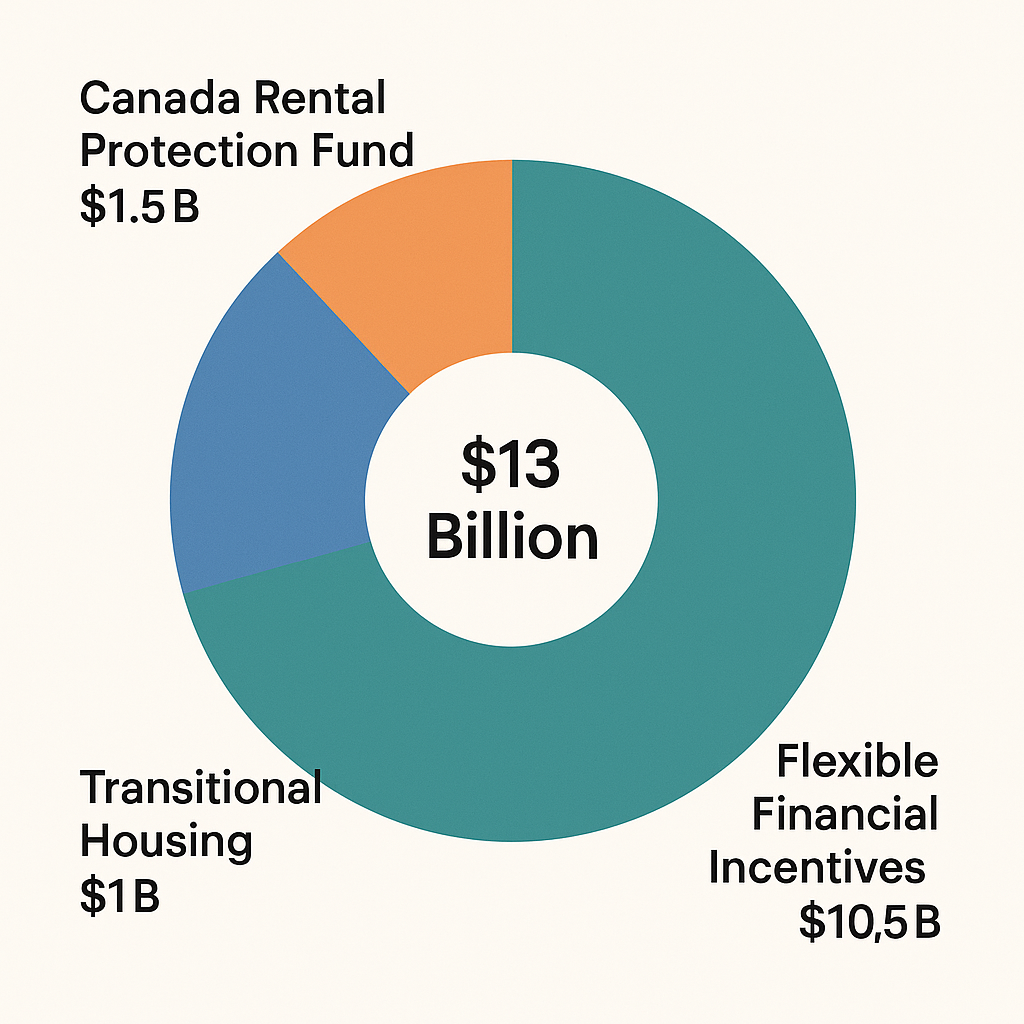
The federal government has committed $6.2 billion to Build Canada Homes, a new agency focused on increasing the pace of affordable housing construction on public land using prefabricated and factory-built methods. Bill C-26 added $1.7 billion in immediate transfers to provinces and territories to reduce development charges and spur new supply.
For Halifax resale sellers planning a transaction in 2026, this is background noise, not an actionable concern. Build Canada Homes is a long-horizon initiative — its effects on HRM's housing stock will not materialise within the next two to three years. The supply levers that matter right now in Halifax Regional Municipality are the provincial special planning areas already approved and under construction: Bedford West, Sackville's Indigo Shores, and Dartmouth's Southdale node.
The honest read for sellers: the new federal supply agenda does not change your immediate market reality. What it does signal over a longer horizon is that new construction will become a more significant competitor to resale inventory. That is a reason to sell into the current window of solid demand rather than assume conditions will improve further. Royal LePage projects Halifax home prices rising approximately 2% through 2026 — modest, stable appreciation, but not dramatic growth that rewards waiting.
For authoritative data on housing supply and construction activity in Halifax, see the CMHC housing market page. [LINK: CMHC housing market data → https://www.cmhc-schl.gc.ca/en/professionals/housing-markets-data-and-research/housing-markets | opens in new tab]
THE FIVE QUESTIONS EVERY HALIFAX SELLER SHOULD BE ASKING RIGHT NOW
Who is actually buying in my price range? The answer in 2026 is more specific than "buyers." First-time buyers dominate below $650,000. Move-up buyers are concentrated around $750,000. Downsizers are active in the $700,000 to $800,000 condo and bungalow segment. Knowing your likely buyer type shapes your presentation and your listing strategy.
Does my property compete with new construction? If yes, the Bill C-4 GST rebate is part of your pricing conversation. If no, it isn't. This is not a universal concern — it is a property-specific one.
Is my price supported by recent comparable sales? The sale-to-original-ask ratio in March 2026 was 98.6% for properties that sold. The ones that did not sell were overpriced at launch. Pricing to the data, not to aspiration, is what the current market rewards.
Am I prepared for a conditional offer? The return of financing and inspection conditions is real and permanent in the current environment. Sellers who treat conditions as a problem rather than a normal part of the process will struggle. Sellers who prepare their property in advance and have reasonable repair expectations will convert those conditions cleanly.
What is my next move, and does the timing work? The budget's expanded buyer programs have made this a strong window to sell a property that appeals to first-time buyers or move-up purchasers. If your next step involves buying into the same market, work through both sides of the transaction before you list.
A NOTE ON WHAT BUDGET 2026 DOES NOT DO FOR SELLERS
It is worth being clear about what is not in the federal budget for existing homeowners. The GST rebate applies to new construction only — you do not benefit from it as a seller of a resale home. No federal measure in this budget provides direct financial relief or incentive specifically to resale home sellers. The mortgage rule changes benefit buyers, which in turn supports demand for your property — but the benefit is indirect.
Nova Scotia has not announced a matching HST relief program equivalent to the Ontario deal announced in March 2026. The Ontario measure — removing the full 13% HST from new builds up to $1 million for one year — is specific to Ontario and does not apply to Nova Scotia buyers or sellers.
For the Bank of Canada's current overnight rate and monetary policy statements, see the Bank of Canada rates page. [LINK: Bank of Canada interest rates → https://www.bankofcanada.ca/rates/ | opens in new tab]
FREQUENTLY ASKED QUESTIONS
Does Budget 2026 help Halifax home sellers directly?
Not through any measure that provides sellers with a direct financial benefit. The budget's housing measures — the Bill C-4 GST rebate on new builds, the 30-year amortisation for insured mortgages, and the raised insured mortgage cap — are all buyer-facing. Their effect on sellers is indirect: they expand the pool of qualified buyers in Halifax Regional Municipality, support demand at current price levels, and improve market conditions for well-priced resale properties. Sellers benefit from a larger, better-financed buyer pool, but there is no seller-specific rebate or incentive in the federal budget.
How does the Bill C-4 GST rebate affect what I should ask for my Halifax resale home?
The Bill C-4 rebate applies to new construction only and has no direct effect on resale pricing. The indirect effect is that first-time buyers comparing your resale to a competing new build at a similar price point now have a net cost advantage on the new build — up to $50,000 at the cap. Whether this is relevant to your pricing depends on whether your property competes directly with new construction in your area and price range. A property in an established Halifax neighbourhood with no meaningful new-build competition at the same price point is largely unaffected. A property in communities like Bedford West, Sackville, or Dartmouth's Southdale node, where new builds are actively selling to first-time buyers, may need to factor this into its positioning.
Is spring 2026 a good time to sell a home in Halifax?
For accurately priced, well-prepared properties, yes. The Halifax-Dartmouth market data for March 2026 shows a median of 13 days on market, a 98.6% sale-to-original-ask ratio, and 2.4 months of supply — all indicators of a market that still leans in sellers' favour on listings that are priced correctly and presented well. The combination of an expanded buyer pool from the new mortgage rules, a spring seasonal surge in buyer activity, and modest but stable price appreciation forecasts for 2026 makes this a functional window to sell. The caveat, consistent with every data point in the current market, is that overpriced listings are not benefiting from these conditions.
This post is for informational purposes only and does not constitute legal, financial, or mortgage advice. Market conditions in Halifax Regional Municipality change frequently. Always consult a qualified mortgage professional, lawyer, or financial advisor before making real estate decisions. Johnny Dulong is a licensed REALTOR® (NS #NA5059) with EXIT Realty Metro serving Halifax Regional Municipality, Nova Scotia.
Last reviewed: April 2026 — reviewed quarterly
Thinking about listing in Halifax this spring? Get a current, data-backed evaluation of your property before you set a price. Call or text Johnny Dulong, Family Real Estate Advisor, EXIT Realty Metro, at 902-209-4761. You can also request a free home evaluation at SellHalifaxRealEstate.com. [LINK: Free home evaluation Halifax → https://sellhalifaxrealestate.com/home-evaluation.html | opens in new tab]
Johnny Dulong | Family Real Estate Advisor | EXIT Realty Metro | 902-209-4761 | SellHalifaxRealEstate.com | Call today — EXIT tomorrow.
#HalifaxRealEstate #SellingYourHome #HalifaxRealtor #NSRealEstate #SellHalifaxRealEstate #HalifaxMarket #Budget2026 #Carney #SellingStrategy #DartmouthRealEstate #BedfordRealEstate #HalifaxSeller