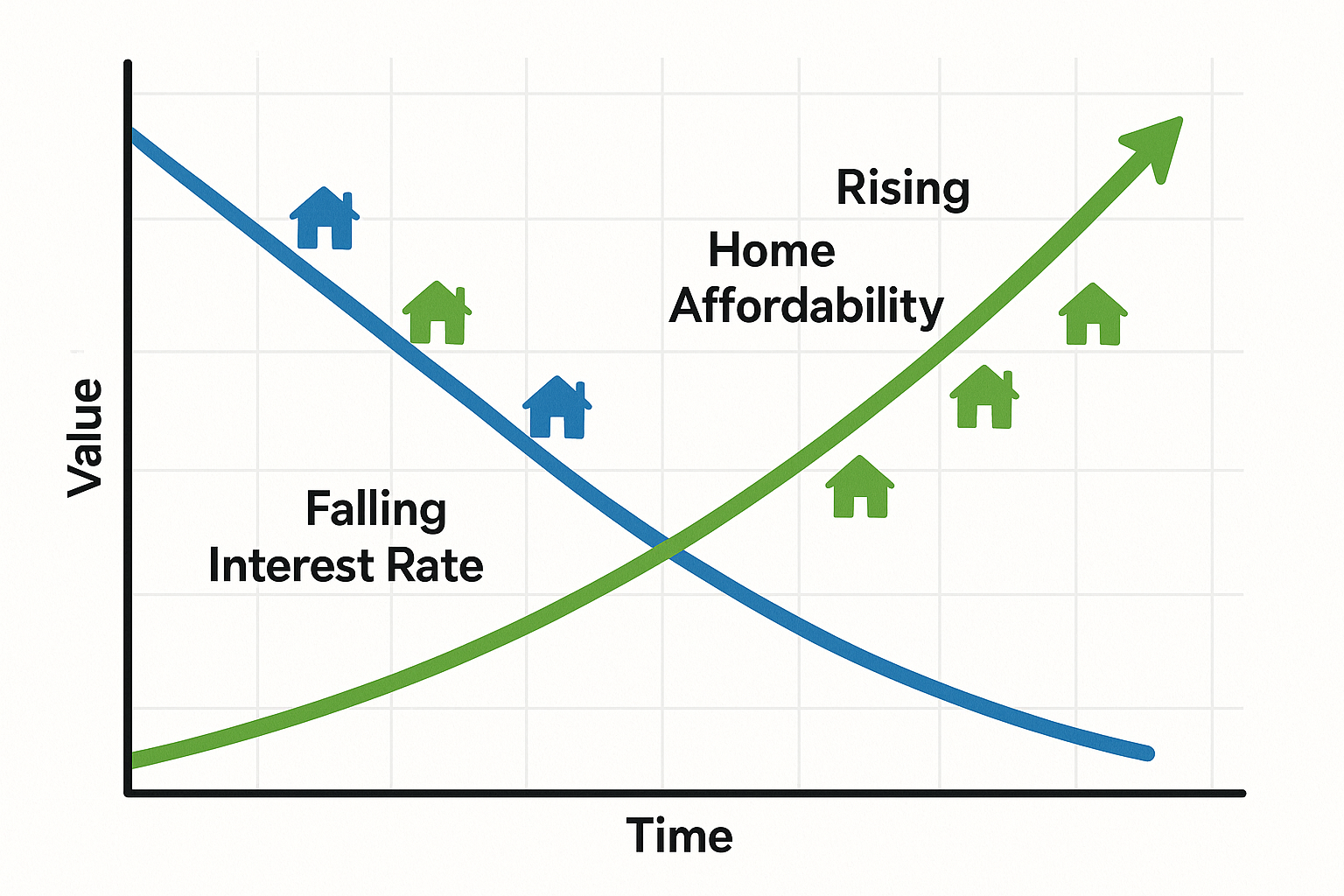
Should Halifax homeowners sell their home before renewing their mortgage in 2026?
If you bought or refinanced in Halifax between 2020 and 2022 at a rate between 1.5% and 2.5%, your renewal is landing in a meaningfully different rate environment. The Bank of Canada's own analysis projects five-year fixed mortgage holders renewing in 2026 face an average payment increase of 15% to 20%. Whether selling before renewal is the right move depends on your equity, your next step, and your specific mortgage terms.
By Johnny Dulong | Family Real Estate Advisor | EXIT Realty Metro | NS #NA5059 | SellHalifaxRealEstate.com | 902-209-4761 | May 14, 2026
When you locked in at 1.79% in 2021, the payment felt manageable. Now that five-year term is ending — and what you're renewing into looks nothing like what you signed for.
For Halifax homeowners who purchased or refinanced between 2020 and 2022, this is the moment of truth. Payments are going up, sometimes significantly, and a lot of people are sitting with a question they haven't fully answered yet: is it worth staying? Or does it make more sense to sell while you still control the timing?
I'm Johnny Dulong, Family Real Estate Advisor at EXIT Realty Metro in Halifax, Nova Scotia. I've been navigating this market for 24 years, working with sellers in Bedford, Dartmouth, Clayton Park, Fall River, Eastern Passage, and across Halifax Regional Municipality. There's no single right answer here — but there is a clear framework for thinking it through. Here's how I walk my clients through this decision.
WHAT MORTGAGE RENEWAL SHOCK ACTUALLY LOOKS LIKE IN HRM
Real numbers help more than abstract warnings, so let's put some on the page.
The Bank of Canada's published analysis is explicit: approximately 60% of all outstanding Canadian mortgages are expected to renew in 2025 or 2026, and five-year fixed-rate holders renewing in 2026 could face an average payment increase of 15% to 20% compared with what they paid in December 2024. That's not a prediction — it's an analysis of the actual mortgage book. [LINK: Bank of Canada — How Mortgage Payments Change at Renewal → https://www.bankofcanada.ca/2025/07/staff-analytical-note-2025-21/ | opens in new tab]
Ratehub.ca's calculations support the picture: a borrower renewing from a 2021 five-year fixed mortgage could see monthly payments rise by approximately $622, or 24%, when renewing at today's best available 5-year fixed rate of 3.84% to 4.04% (WOWA and Ratehub.ca, May 2026). Over a full year, that's more than $7,400 in additional payments.
Here's what this looks like using Halifax numbers specifically. If you borrowed $500,000 at 1.99% in 2021 on a 25-year amortization, your monthly principal and interest was roughly $2,100. After five years of payments, your remaining balance is approximately $415,000. At today's best available renewal rate of 3.84%, that remaining balance carries a monthly payment of about $2,490 — an increase of roughly $390 per month at the most competitive rate on the market. At 4.04%, the increase is closer to $430. Most Halifax borrowers will renew somewhere in this range or modestly above, depending on their lender, credit profile, and negotiating position.
On a $600,000 original Halifax mortgage, the monthly increase at current best rates reaches $475 to $540. On a $700,000 mortgage — increasingly common for detached homes in Bedford, Fall River, or the Halifax peninsula — the additional monthly cost runs $550 to $650.
This isn't a temporary inconvenience. It's a material change to your household budget that persists for another full term. And it's exactly why inventory in Halifax Regional Municipality has been climbing steadily — many of those new listings belong to homeowners who ran the numbers and decided that selling on their terms beats absorbing a payment they didn't plan for.
YOUR THREE REAL OPTIONS AT RENEWAL
When your renewal date arrives, you have three meaningful paths.
Option 1: Renew and absorb the increase. This works if your income has kept pace, your household has genuine budget flexibility, and you plan to stay in the home for another five or more years. Rates may ease in the next term, and if you can manage the adjustment, renewal is the lowest-friction path. No move, no disruption, no transaction costs.
Option 2: Shop lenders and negotiate a better rate. Your current lender is not your only option — and their initial renewal letter is almost never their best offer. A mortgage broker can access dozens of lenders and may find a rate meaningfully better than your bank's posted renewal rate. This can soften the payment increase without requiring a sale.
One important rule change to know here: since November 21, 2024, OSFI — Canada's banking regulator — no longer requires uninsured mortgage borrowers to qualify at the stress test minimum qualifying rate when switching to a new federally regulated lender at renewal. This is a straight switch, meaning your loan amount and amortization must remain the same. The mandatory minimum qualifying rate is removed, but your new lender will still assess your ability to service the debt under its own underwriting standards. The practical effect is significant: borrowers who previously couldn't qualify to switch lenders because of the stress test hurdle can now shop for a better rate without that barrier. If your renewal is approaching, this change is worth understanding before you sign anything. [LINK: OSFI — Stress Test Removal for Uninsured Mortgage Switches → https://www.osfi-bsif.gc.ca/en/guidance/guidance-library/osfi-exempts-uninsured-mortgage-straight-switches-prescribed-mqr-implements-portfolio-lti-limits | opens in new tab]
Option 3: Sell before or at renewal. If the payment increase would materially strain your household, or if a move has been in the back of your mind anyway, selling on your own timeline — before financial pressure forces the decision — puts you in control. You capture your equity at current market values, eliminate the payment shock entirely, and move into your next chapter from a position of strength rather than stress.
Option 3 is the path more Halifax homeowners are choosing in 2026 than at any point in recent memory. And for many, it's the right one.
THE CASE FOR SELLING NOW
Halifax's housing market has shifted, but it hasn't collapsed. That's a distinction worth holding onto carefully.
As of April 2026, HRM is sitting at 2.7 months of supply — still technically a seller's market by the standard 4 to 6 month definition of balanced conditions, but inventory has risen steadily from 2.3 months in April 2025 and the trend is continuing. There are now 1,105 active residential listings across HRM, the highest level in over a year. Well-priced, well-prepared homes are still selling. Buyers have returned with purchasing power, conditions are being written and accepted, and the bidding war era has given way to something more orderly. Halifax buyers averaged 97.5% of list price in April 2026 — down from 99.1% a year earlier, but still strong by any historical measure.
What has changed is that overpricing is being punished. In March 2026 alone, there were 233 price reductions across HRM compared to 330 total sales that month. That ratio tells you something important: sellers who launch with unrealistic expectations are sitting on the market and eventually cutting. Sellers who price accurately and present their homes well are still transacting cleanly.
For a homeowner who bought in 2020 or 2021, the equity position is almost certainly meaningful. Even with the more modest appreciation seen since the 2022 peak, most HRM homeowners from that era are sitting on significant gains. The question is whether capturing those gains now — before further market softening, and before another full term of higher payments — makes more financial sense than staying.
For a current picture of how Halifax homes are actually performing this spring, see the April 2026 Halifax market update on this blog. [LINK: Halifax Real Estate Market Update April 2026 → https://sellhalifaxrealestate.com/blog.html/halifax-real-estate-market-update-april-2026-8984484 | opens in new tab]
THE TRUE COST OF WAITING
One of the exercises I work through with clients is the cost of waiting. It's not as obvious as it sounds.
If your payment increases by $800 per month at renewal and you list the home six months later, you've absorbed roughly $4,800 in additional payments that won't come back. On top of that, every month you carry a home you're planning to sell is a month of additional property tax, maintenance, and heating costs.
Selling proactively — before financial pressure builds — means you control the timeline, the pace of your preparation, and the emotional temperature of the process. Selling reactively, under financial strain, tends to produce rushed decisions, compressed timelines, and weaker outcomes. The best sellers I've worked with across Halifax Regional Municipality have been the ones who made the call clearly and early, not the ones who waited until the pressure was unbearable.
WHAT IT ACTUALLY COSTS TO SELL IN HRM
Before you decide, you need an honest picture of your selling costs. Here's what to budget for on the seller side.
Real estate commission: Negotiated with your agent. Factor this into your net proceeds calculation from the beginning.
Legal fees: Nova Scotia is a lawyer-closing province. Your lawyer handles the closing, deed transfer, and payout of your existing mortgage. Budget $1,500 to $2,500 for legal fees, though this varies by firm and transaction complexity.
Mortgage prepayment penalty (if selling mid-term): This is the item that surprises people most. If you sell before your renewal date rather than at it, your lender will charge a prepayment penalty. On a fixed-rate mortgage, this is typically calculated as an Interest Rate Differential (IRD), which can range from a few thousand dollars to $15,000 or more depending on your original rate, remaining term, and current rates. Get the exact figure from your lender before committing to a timeline — it's essential to your net proceeds calculation.
Pre-sale preparation: Painting, cleaning, staging, and minor repairs. Even modest preparation pays dividends on final sale price and days on market.
Adjustments at closing: Your lawyer's Statement of Adjustments will reconcile prepaid property taxes, utility deposits, and similar items.
Total seller-side transaction costs — excluding any prepayment penalty — typically run 5% to 8% of the sale price. On a $650,000 Halifax home, that's $32,500 to $52,000. It's a real number and it needs to be weighed honestly against your equity position and your next move.
For a complete breakdown of Municipal Deed Transfer Tax in HRM and how it factors into closing costs, see the Halifax Deed Transfer Tax guide on this blog. [LINK: Halifax Deed Transfer Tax: How to Calculate Your Closing Costs → https://sellhalifaxrealestate.com/blog.html/halifax-deed-transfer-tax-how-to-calculate-your-closing-costs-8939602 | opens in new tab]
WHO THIS MOVE MAKES THE MOST SENSE FOR
Selling before renewal is worth serious consideration if any of these apply to your situation:
The renewal payment increase would genuinely strain your monthly household budget
You've been thinking about moving anyway — downsizing, upsizing, relocating within HRM, or leaving the region
You're carrying more home than you currently need and would be comfortable in something smaller
Your home needs meaningful capital work and you'd rather sell than invest further into it
You can sell at or close to your renewal date, avoiding a mid-term penalty entirely
It makes less sense if the payment increase is manageable, if you're in a long-term hold, or if you'd face a significant mid-term prepayment penalty that offsets the financial relief of selling.
If you're in the seniors or empty-nester category specifically, there's additional detail on this decision — including timing and neighbourhood-specific considerations — in the post on why Halifax seniors should downsize before the 2026 renewal wave. [LINK: Why Halifax Seniors Should Downsize Before the 2026 Renewal Wave → https://sellhalifaxrealestate.com/blog.html/why-halifax-seniors-should-downsize-before-the-2026-renewal-wave-8957107 | opens in new tab]
The honest answer is that this is a numbers exercise, and the numbers are specific to your mortgage balance, your home's current value, your equity, and where you're going next. Running it in the abstract tells you very little. Running it with your real figures — your actual renewal rate, your actual equity, and a realistic net sale figure for your specific home and neighbourhood — gives you a decision you can act on with confidence.
FREQUENTLY ASKED QUESTIONS
What happens to my mortgage if I sell my Halifax home before the renewal date?
If you sell mid-term — before your renewal date — your lender will discharge your mortgage and charge a prepayment penalty. For fixed-rate mortgages, this is typically calculated using the Interest Rate Differential (IRD) method, which compares your contracted rate to the lender's current rate for the remaining term. The penalty can range from a few thousand dollars to well over $10,000 depending on your original rate, remaining term, and lender. Get the exact figure from your lender before setting a listing timeline — it's essential to your net proceeds calculation.
Is the Halifax market still good for sellers in spring 2026?
Yes — with important nuance. Well-priced, well-presented homes in HRM are still selling at strong percentages of asking price. Halifax is sitting at 2.7 months of supply as of April 2026 — still a seller's market by standard definitions, but trending toward balance as inventory builds. The biggest mistake sellers are making right now is overpricing: 233 price reductions across HRM in March 2026 versus 330 total sales tells you that the market is penalising unrealistic launches. Accurate pricing from the start consistently outperforms an overpriced launch followed by a reduction.
What does the OSFI stress test change mean for Halifax homeowners renewing in 2026?
Since November 21, 2024, OSFI no longer requires uninsured mortgage borrowers to qualify at the prescribed minimum qualifying rate when making a straight switch to a new federally regulated lender at renewal — meaning the loan amount and amortization stay the same. This removes a significant barrier that previously locked many borrowers into their current lender at renewal. You can now shop for a better rate across lenders without having to re-qualify at a stress test rate. Your new lender will still assess your ability to service the debt, but the mandatory minimum qualifying rate hurdle is gone. If your renewal is approaching and you have an uninsured mortgage, this change meaningfully expands your options.
What does it cost to sell a home in Halifax Regional Municipality?
Seller-side costs in HRM typically run 5% to 8% of the sale price when you include real estate commission, legal fees, and pre-sale preparation. Nova Scotia is a lawyer-closing province, so your lawyer handles the closing process and the discharge of your mortgage — budget $1,500 to $2,500 for legal fees. The Municipal Deed Transfer Tax of 1.5% of the purchase price is paid by the buyer, not the seller, in HRM. If you are selling mid-term before your renewal date, a mortgage prepayment penalty must also be factored into your net proceeds calculation.
What if I sell before my mortgage renews but can't find a home to buy?
This is a real concern in Halifax's current market, where bungalows and mid-size condos suitable for downsizers are in short supply in some price ranges. Options to manage the gap include negotiating a longer closing period with your buyer, executing a simultaneous closing if you've already identified a purchase, or planning a short-term rental bridge between the two transactions. Your agent and your lawyer can help structure the timelines to minimise the gap. The key is planning early — not assuming everything will line up on its own.
Last reviewed: May 2026 — reviewed quarterly.
This post is for informational purposes only and does not constitute legal, financial, or mortgage advice. Market conditions in Halifax Regional Municipality change frequently. Always consult a qualified mortgage professional, lawyer, or financial advisor before making real estate decisions. Johnny Dulong is a licensed REALTOR® with EXIT Realty Metro serving Halifax Regional Municipality, Nova Scotia.
Ready to work through what selling would actually net you in today's Halifax market? Call or text Johnny Dulong, Family Real Estate Advisor, EXIT Realty Metro, at 902-209-4761. You can also explore current Halifax listings and seller resources at SellHalifaxRealEstate.com.
Johnny Dulong | Family Real Estate Advisor | EXIT Realty Metro | 902-209-4761 | SellHalifaxRealEstate.com | Call today — EXIT tomorrow!
#HalifaxRealEstate #MortgageRenewal #SellHalifaxRealEstate #HalifaxRealtor #HRMHomes #SellingStrategy #MortgageRenewalShock #NovaScotiaRealEstate #HalifaxHomeowner #ExitRealtyMetro #DownsizingHalifax #HalifaxMarket2026